Image 1 of 2
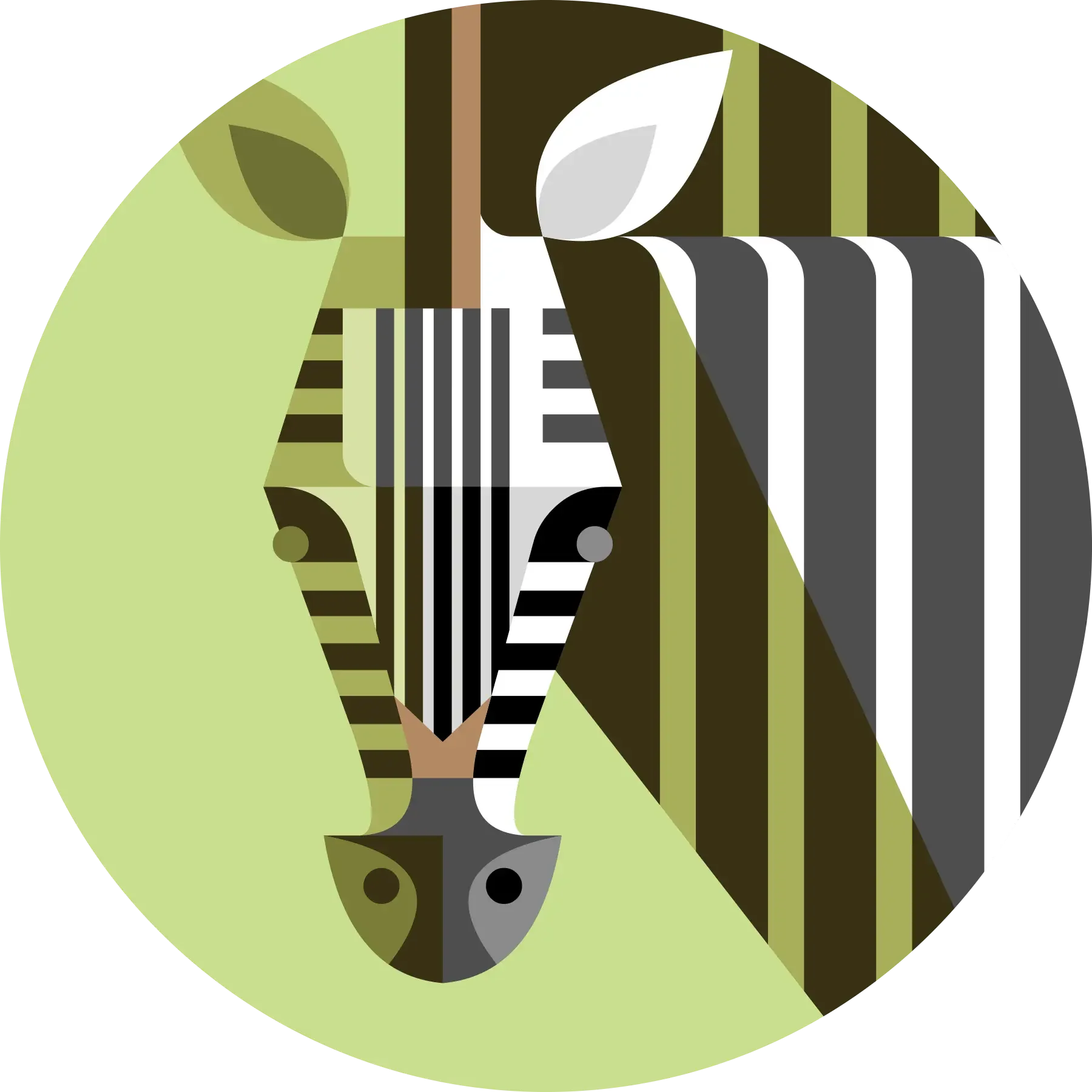 Image 2 of 2
Artwork
-
Open edition: Museum-quality giclée print on matte fine art paper (acid-free). Vibrant, long-lasting archival inks. Artist’s digitally printed signature.
-
8×10” (20×25 cm) — 12×14" (30×36 cm)
13×17" (33×43 cm) — 16×20" (41×51 cm)
16×20" (41×51 cm) — 18×24" (46×61 cm)
20×30" (51×76 cm) — 24×36" (61×91 cm)
-
Frame not included. Print includes a white border for flexible framing options.
Fits Standard Frames
Works with most stock frames (slight adjustment may be needed)
Border allows trimming to fit your frame perfectly
Edge-to-edge fit with many matted frames
Border Benefits
Extra paper for mounting tabs
Accommodates wider or taller matte windows
Shows clean paper edge instead of print edge for a polished look
Pro Tip: For a perfect fit, pair with a custom matte in your stock frame.
Symbolism
The zebra carries profound meaning across many African cultures and modern interpretations. These three attributes represent its most enduring symbolic associations throughout history.
-
Distinctive identity within the whole
No two zebras share the same stripe pattern—each is as unique as a human fingerprint, with patterns so distinct they're used by researchers to identify individuals. The San people of the Kalahari Desert associate each zebra's unique pattern with personal authenticity, celebrating the importance of recognizing individual uniqueness within community. The Maasai express this through the proverb "a man without culture is like a zebra without stripes," highlighting how personal identity is shaped by both inner nature and cultural belonging. This symbolizes the courage to stand out, to embrace what makes you different, and to resist conformity. The zebra doesn't apologize for its bold stripes or try to blend in—it exists confidently as itself, reminding us that our distinctiveness is our strength.
-
Strength found in collective unity
Zebras live in small family groups within larger herds that can number in the thousands during migrations. Their intricate social behavior demonstrates cooperation and collective watchfulness—when threatened, they form protective circles and use their collective striped patterns to confuse predators. One zebra always remains alert while others sleep, exemplifying shared responsibility for the group's safety. In African cultures, zebra symbolism emphasizes the importance of collective action, mutual support, and the strength found in unity. Their behavior serves as a reminder that we thrive through connection, that protection comes from community, and that individual survival depends on collective vigilance. The zebra shows us how to belong without losing ourselves.
-
Harmony between opposing forces
The zebra's black and white stripes represent the harmony between opposing forces, similar to yin and yang—light and darkness, certainty and mystery, individual and collective. This duality reflects the interconnectedness of life's contrasting aspects, teaching us to embrace both the positive and challenging parts of existence. The stripes create a visual rhythm, a balanced pattern that neither dominates nor recedes. In various African traditions, this represents the delicate equilibrium between nature and humanity, between standing out and fitting in, between self-expression and social harmony. The zebra moves through life holding these paradoxes without conflict, reminding us that balance isn't about choosing sides—it's about integrating opposites into a cohesive whole.
Fauna
-
Zebras have roamed African plains for millions of years, evolving their distinctive stripes as both an identification and a survival mechanism. They appear in Southern African rock art dating back 28,000-20,000 years, making them among the earliest documented animals in human culture. Indigenous African peoples have long revered zebras, weaving them into creation stories and spiritual traditions.
In Maasai culture, a divine gift story explains that zebras were once entirely white until the god Engai bestowed black stripes as symbols of power and courage. The Himba people view zebras as symbols of social connection, while the Zulu believe specific stripe patterns can bring fortune. Zebras hold such significance in African culture that they're Botswana's national animal. Unlike horses, zebras have never been successfully domesticated, maintaining their wild spirit and representing freedom throughout human history.
-
Common Name: Plains Zebra (most common species)
Scientific Name: Equus quagga
Height: 1.1–1.5 meters (3.6–4.9 feet) at the shoulder
Weight: 175–385 kg (385–850 lbs)
Length: 2.2–2.5 meters (7.2–8.2 feet) body length
Lifespan: 20–25 years in the wild
Habitat: Grasslands, savannas, and open woodlands
Range: Eastern and southern Africa (over 15 countries)
Diet: Herbivore (grasses, leaves, shrubs)
Conservation Status: Near Threatened (IUCN)
Population: Approximately 150,000–250,000 plains zebrasDistinctive Features: Each zebra has a unique stripe pattern; no two are identical. Stripes reflect over 70% of incoming heat, helping regulate body temperature. Vertical stripes on forequarters, horizontal on hindquarters. Research shows stripes deter biting flies, which struggle to land on striped surfaces. Strong social bonds, excellent eyesight, and speeds up to 65 km/h (40 mph).
-
Foals imprint on their mother's unique stripe pattern within hours of birth to identify her within the herd. Each zebra develops distinct vocalizations—they have at least six different vocal calls, from two-syllable alarm calls to snorts indicating happiness. They use facial expressions and body language for individual communication, sticking their ears forward when greeting and pulling them back when threatened. While sharing communal space, each zebra maintains its personal identity through these unique patterns and behaviors.
Zebras live in stable family groups called harems—one stallion, several mares, and their offspring—that stay together for months or years. During migrations, these families travel together in search of food and water. The famous Serengeti migration can cover around 2,900 kilometers (1,800 miles) annually, involving zebras alongside wildebeest and other grazers, making it one of nature's great spectacles. When predators approach, zebras form semi-circles facing the threat and even try to protect injured members of their group, using their striped patterns to create visual confusion. Other zebras sleep soundly; however, there is always one standing alert and on guard, demonstrating trust and shared responsibility. They also cooperate with other grazers like wildebeest during migrations.
As pioneer grazers, zebras eat taller, tougher vegetation, preparing landscapes for other species that need shorter grasses. This ecological balance makes them keystone species in their habitat. Their stripes create both camouflage and recognition—they stand out individually yet blend collectively when grouped. Stallions establish dominance through measured combat using powerful bites and kicks, but these conflicts are brief and strategic rather than sustained aggression. Zebras have never been completely domesticated, embodying both wild independence and deep social bonds simultaneously.
Recommended
Modern, contemporary, eclectic, and bold minimalist interiors.
Spaces with neutral walls where striking black-and-white creates visual impact.
Living rooms, offices, creative studios, and entryways are seeking statement art.
Interiors valuing graphic design and high-contrast aesthetics.
Shipping
-
Your print is made to order and ships from the closest production location to you, helping reduce delivery time and the chance of customs delays. Facilities are located across the U.S., Canada, Mexico, Brazil, Europe, the U.K., Australia, and Japan. Most orders ship from within the same region they’re delivered to.
If your country requires VAT (such as the U.K. or EU), it’s collected at checkout. U.S. customers are not charged VAT.
-
Production
2–5 business days for production fulfillment
Shipping
Estimated delivery (after production):
US: 3–8 business days
Canada / Europe / Australia: 5–12 business days
Other international locations: Timing varies by region based on local carriersThese are estimates and not guarantees — delivery times may vary during high-demand seasons
-
VAT
For many international destinations (including the UK and EU), VAT is collected at checkout and included in your order total. This helps reduce unexpected charges on delivery.Customs Duties & Import Taxes
Some countries may still apply additional import charges, depending on:Local regulations
The value of your order
Whether your country applies duties to printed goods or framed products
These fees, if applied, are the responsibility of the recipient and are not included in the product or shipping cost.
-
Tariff rules vary by country and sometimes change year-to-year. Depending on your region, you may see customs tariffs on certain manufactured goods. When possible, your order ships from a regional facility to help minimize or avoid tariff costs.
-
The holiday season brings significantly increased demand across all shipping carriers. This can affect both production and transit times.
Here’s what you need to know:
Order earlier than usual to ensure holiday delivery.
Carriers may apply seasonal surcharges and experience longer processing times.
Delivery estimates are not guaranteed during peak holiday periods.
Orders placed in late December may arrive after the holiday, depending on your region.
Instead of strict cutoff dates (which vary globally and change year-to-year), the safest window is:
For December gift-giving, place orders as early in November as possible.