Image 1 of 3
 Image 2 of 3
 Image 3 of 3
Artwork
-
Open edition: Museum-quality giclée print on matte fine art paper (acid-free). Vibrant, long-lasting archival inks. Artist’s digitally printed signature.
-
5×7” (13×18 cm) — 8×10” (20×25 cm)
8×10” (20×25 cm) — 12×16” (30×41 cm)
12×17” (30×43 cm) — 16×20” (41×51 cm)
16×20” (41×51 cm) — 18×24” (46×61 cm)
20×30” (51×76 cm) — 24×36” (61×91 cm)
-
Frame not included. Print includes a white border for flexible framing options.
Fits Standard Frames
Works with most stock frames (slight adjustment may be needed)
Border allows trimming to fit your frame perfectly
Edge-to-edge fit with many matted frames
Border Benefits
Extra paper for mounting tabs
Accommodates wider or taller matte windows
Shows clean paper edge instead of print edge for a polished look
Pro Tip: For a perfect fit, pair with a custom matte in your stock frame.
Symbolism
The Mountain Bluebird carries symbolic meaning shaped by its high-altitude adaptations and gentle demeanor. These three qualities define its most enduring symbolic associations.
-
Thriving in thin air
Mountain Bluebirds inhabit high-elevation meadows and open country up to 12,500 feet, where oxygen is scarce and weather unpredictable. They adjust to temperature extremes, nest in harsh exposed locations, and modify foraging techniques based on conditions—hovering when perches are scarce, ground-hunting when weather grounds flying insects. This represents the capacity to succeed in demanding environments by adjusting approach rather than requiring ideal conditions.
-
Calm presence in harsh places
Despite living in rugged mountain environments, Mountain Bluebirds are peaceful and gentle birds—soft-voiced, non-aggressive, and deliberate in movement. Males bring food to incubating females in tender beak-to-beak exchanges. They hover gracefully rather than striking aggressively. This represents the principle that gentleness is not incompatible with strength, understanding that calm presence can thrive even in challenging circumstances.
-
Returning with the season
Mountain Bluebirds are among the first migrants to return to high elevations in spring, often arriving when snow still covers the ground. Their vivid sky-blue plumage against lingering winter landscape has made them symbols of spring's arrival and better conditions ahead. This represents optimism grounded in action—showing up early, trusting conditions will improve, and beginning work before everything is perfect.
Fauna
-
Mountain Bluebirds inhabit open country across western North America, from Alaska and western Canada south through mountain regions to Mexico. They prefer meadows, grasslands, sagebrush flats, and alpine areas with scattered trees for nesting. They breed at elevations from sea level to over 12,000 feet, with highest populations in montane and subalpine zones. Northern and high-elevation populations migrate to lower elevations or southern regions for winter, while some remain year-round in milder areas.
-
Common Name: Mountain Bluebird
Scientific Name: Sialia currucoides
Length: 6.5-7.9 inches (16.5-20 cm)
Weight: 1-1.1 ounces (28-32 grams)
Wingspan: 11-14 inches (28-36 cm)
Sexual Dimorphism: Males are brilliant sky-blue overall with lighter underparts. Females are gray-brown with blue tinges on wings and tail, much duller than males
Coloration: Males display vivid cerulean blue upperparts and head with paler blue underparts, no rusty coloring (unlike other bluebirds). Females show gray-brown bodies with blue wings and tail. Both have dark eyes and legs
Distinctive Features: Longer wings and tail than other bluebirds; slimmer build; ability to hover while hunting; vivid sky-blue male plumage; gentle, soft vocalizations; tendency to perch on exposed locations. -
Mountain Bluebirds feed primarily on insects during breeding season—grasshoppers, beetles, crickets, and flies—and supplement with berries in winter. Their hunting technique is distinctive: they hover 10-40 feet above ground, scanning for movement below, then drop to capture prey. They also hunt from perches and occasionally catch flying insects in the air. This hovering behavior is unique among North American bluebirds.
They nest in natural tree cavities, old woodpecker holes, or nest boxes, often in areas with very sparse tree cover. Males arrive first on breeding grounds and claim territories, often defending multiple potential nest sites. Females select the final site and build nests of grass and plant stems lined with feathers. They lay 4-8 eggs, incubating for 13-14 days while males bring food. Both parents feed nestlings for about 22 days until fledging. Pairs often raise two broods per season.
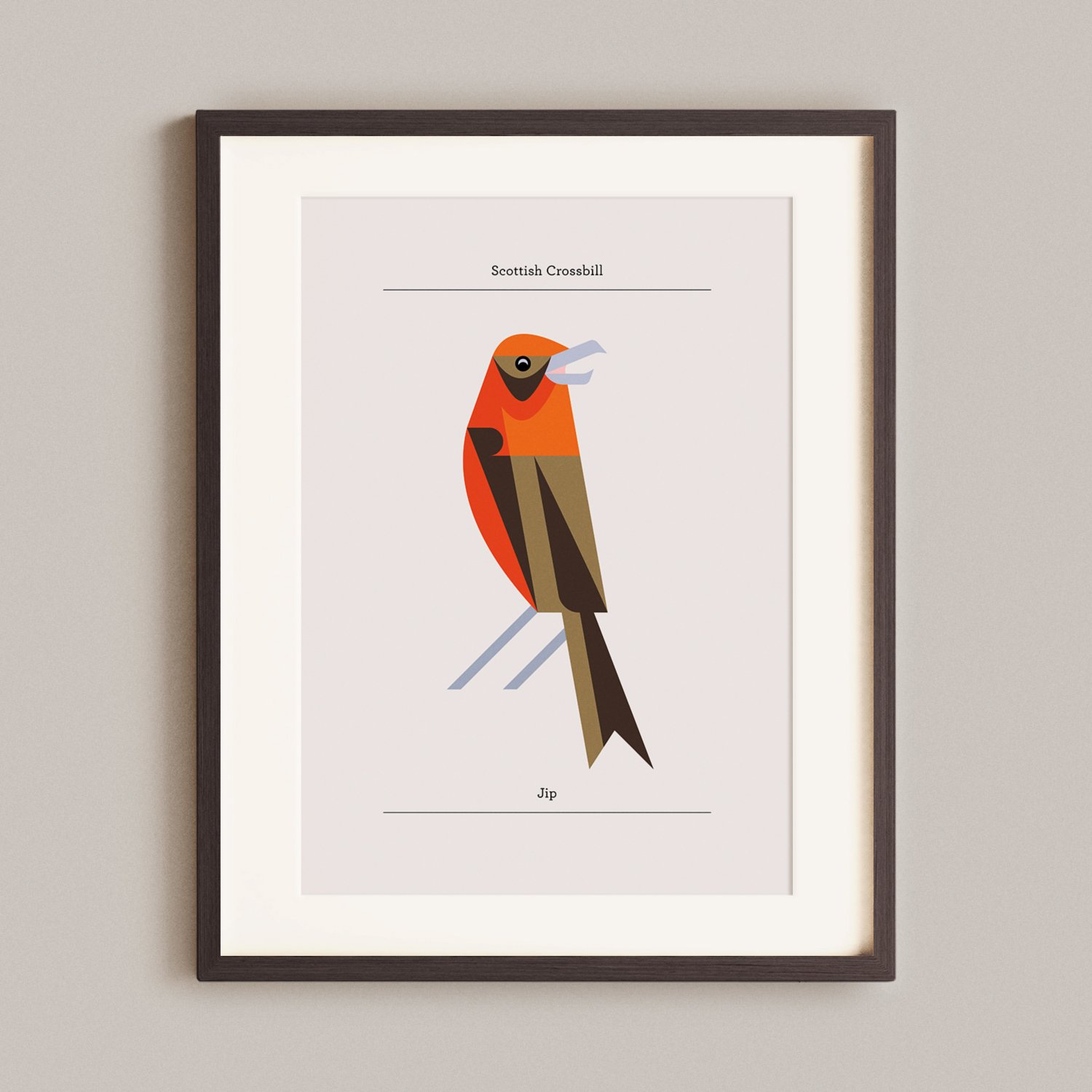
Mountain Bluebirds have soft, gentle vocalizations. Their most common call is a low, mellow "poly-chow" or "tru-lee"—the vocalization featured on this artwork. These calls are softer and less musical than other bluebirds' songs. They also produce brief warbling songs and soft contact calls between pairs. Their gentle voices match their peaceful demeanor, contrasting with the harsh mountain environments they inhabit.
Collection
-
The Flora Fauna Collection began in 2007 as an ongoing visual study of wildlife from around the world. Each piece captures both the essential form of a species and the unique character it embodies—celebrating natural beauty while revealing what makes each animal distinct.
-
Featured in British Vanity Fair, IDN Magazine, Dwell, Apartment Therapy, Design Milk, and Complex. The collection appeals to wildlife enthusiasts, design-focused collectors, and those who find personal meaning in the animals they choose to live with.
-
Designed for modular display and gradual collecting. These prints work individually as accent pieces or grouped to create personal galleries. Build a collection by region, habitat, aesthetic preference, or personal connection.
Recommended
Ideal for meditation spaces and calming environments where gentle presence and quiet strength both matter.
Works well as a standalone serene focal point or grouped with other mountain species in arrangements celebrating elevation.
Complements cool blues, soft grays, and spaces with open, airy aesthetics that invite calm.
Featured

Shipping
-
Your print is made to order and ships from the closest production location to you, helping reduce delivery time and the chance of customs delays. Facilities are located across the U.S., Canada, Mexico, Brazil, Europe, the U.K., Australia, and Japan. Most orders ship from within the same region they’re delivered to.
If your country requires VAT (such as the U.K. or EU), it’s collected at checkout. U.S. customers are not charged VAT.
-
Production
2–5 business days for production fulfillment
Shipping
Estimated delivery (after production):
US: 3–8 business days
Canada / Europe / Australia: 5–12 business days
Other international locations: Timing varies by region based on local carriersThese are estimates and not guarantees — delivery times may vary during high-demand seasons.
-
VAT
For many international destinations (including the UK and EU), VAT is collected at checkout and included in your order total. This helps reduce unexpected charges on delivery.Customs Duties & Import Taxes
Some countries may still apply additional import charges, depending on:Local regulations
The value of your order
Whether your country applies duties to printed goods or framed products
These fees, if applied, are the responsibility of the recipient and are not included in the product or shipping cost.
-
Tariff rules vary by country and sometimes change year-to-year. Depending on your region, you may see customs tariffs on certain manufactured goods. When possible, your order ships from a regional facility to help minimize or avoid tariff costs.
-
The holiday season brings significantly increased demand across all shipping carriers. This can affect both production and transit times.
Here’s what you need to know:
Order earlier than usual to ensure holiday delivery.
Carriers may apply seasonal surcharges and experience longer processing times.
Delivery estimates are not guaranteed during peak holiday periods.
Orders placed in late December may arrive after the holiday, depending on your region.
Instead of strict cutoff dates (which vary globally and change year-to-year), the safest window is:
For December gift-giving, place orders as early in November as possible.