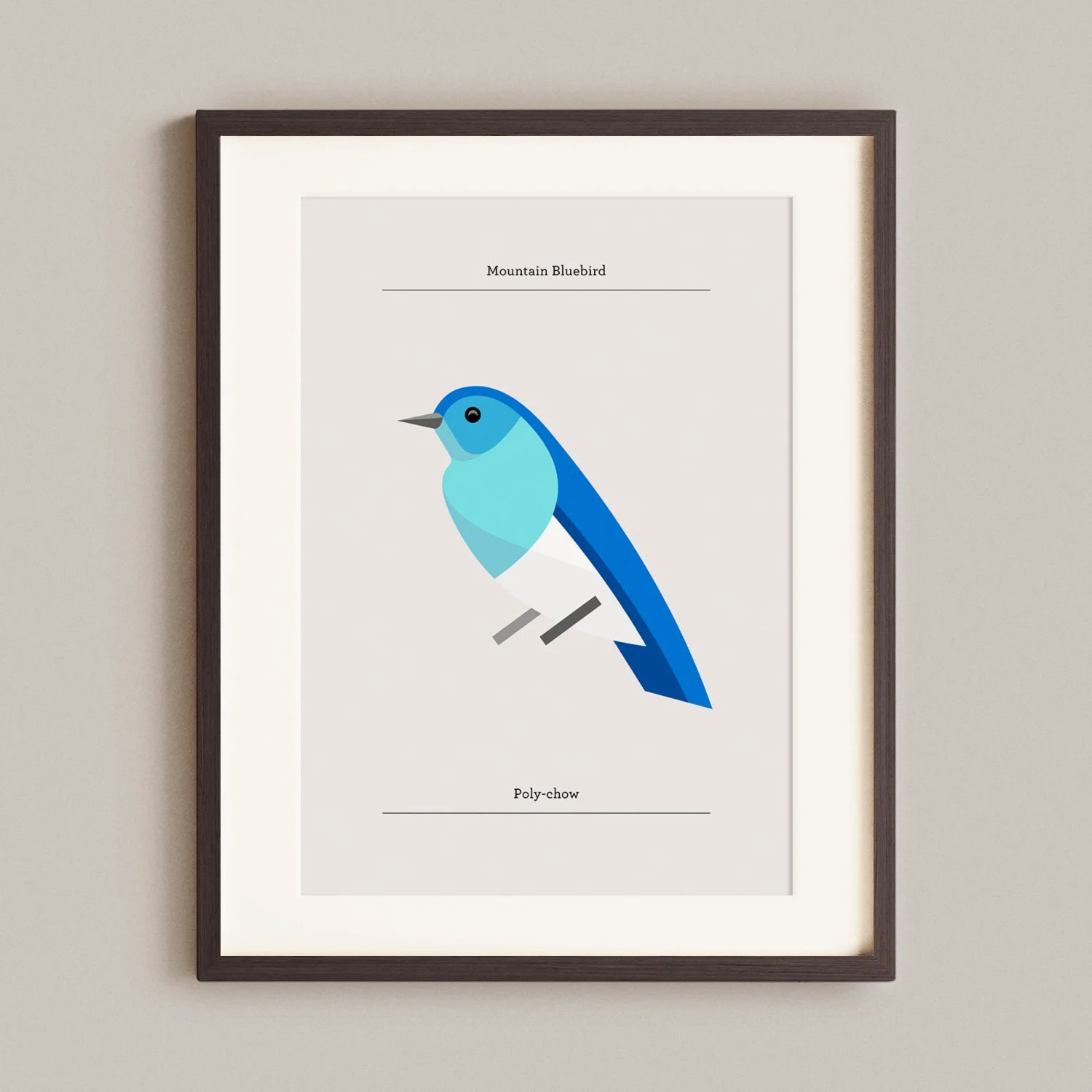
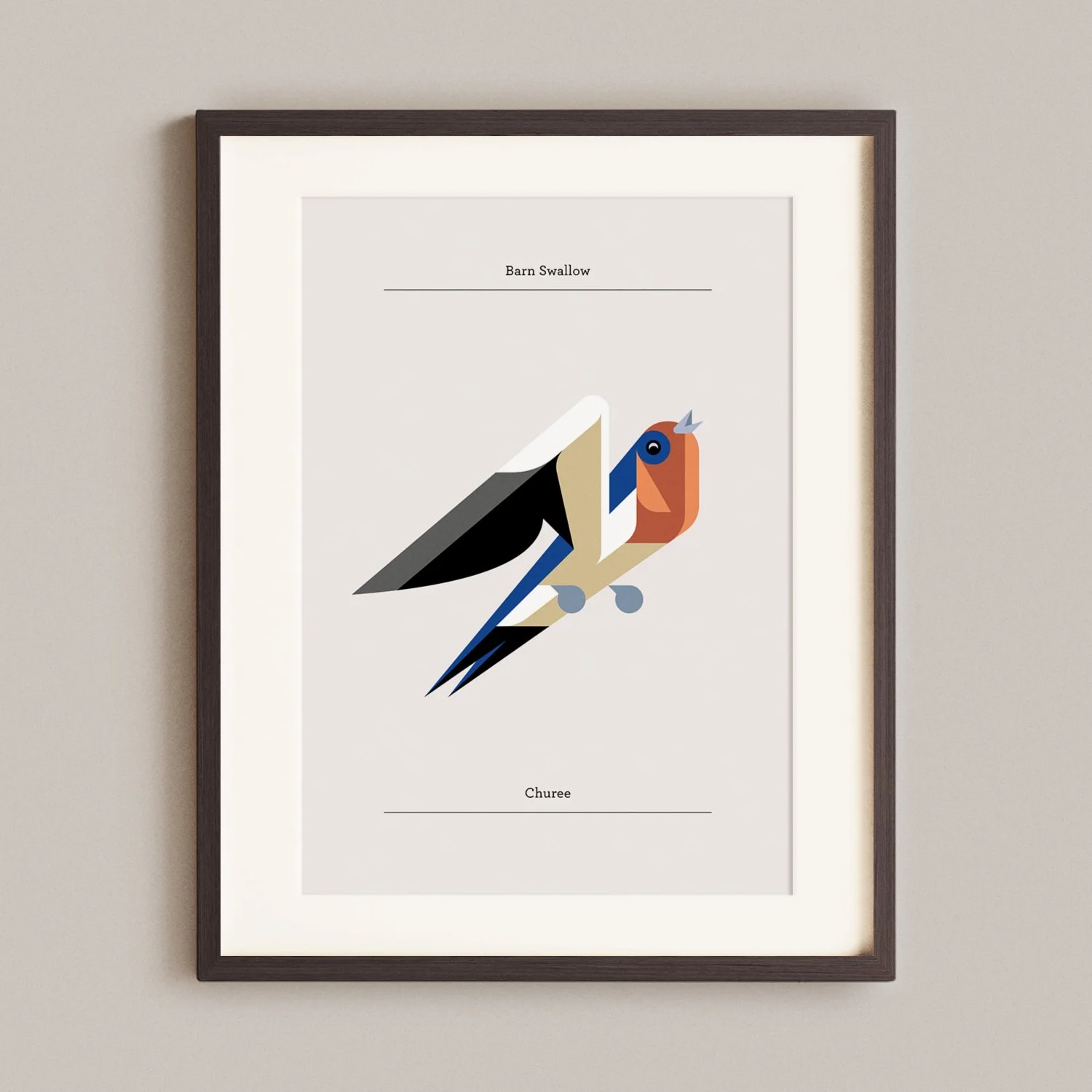
Image 1 of 3
 Image 2 of 3
 Image 3 of 3
Artwork
-
Open edition: Museum-quality giclée print on matte fine art paper (acid-free). Vibrant, long-lasting archival inks. Artist’s digitally printed signature.
-
5×7” (13×18 cm) — 8×10” (20×25 cm)
8×10” (20×25 cm) — 12×16” (30×41 cm)
12×17” (30×43 cm) — 16×20” (41×51 cm)
16×20” (41×51 cm) — 18×24” (46×61 cm)
20×30” (51×76 cm) — 24×36” (61×91 cm)
-
Frame not included. Print includes a white border for flexible framing options.
Fits Standard Frames
Works with most stock frames (slight adjustment may be needed)
Border allows trimming to fit your frame perfectly
Edge-to-edge fit with many matted frames
Border Benefits
Extra paper for mounting tabs
Accommodates wider or taller matte windows
Shows clean paper edge instead of print edge for a polished look
Pro Tip: For a perfect fit, pair with a custom matte in your stock frame.
Symbolism
The Black-capped Chickadee carries symbolic meaning shaped by its extraordinary memory and winter survival strategies. These three qualities define its most enduring symbolic associations.
-
Always exploring, always learning
Black-capped Chickadees investigate everything in their environment—examining bark crevices, checking seed feeders, and even approaching humans with fearless inquisitiveness. They learn constantly, adapting their foraging techniques and discovering new food sources. This represents an active engagement with the world, understanding that curiosity drives learning and that exploration creates opportunity.
-
Holding what matters
Chickadees cache thousands of seeds and insects daily across their territory, then retrieve them weeks later with remarkable spatial memory. Their hippocampus—the brain region governing memory—actually grows larger in fall to accommodate this demand, then shrinks in spring. This represents the ability to retain and recall what's important, understanding that memory serves future needs and that storing knowledge creates reserves for harder times.
-
Thriving where others struggle
Black-capped Chickadees survive winters as cold as -40°F through remarkable physiological adaptations. They lower their body temperature at night to conserve energy, fluff their feathers to trap warm air, and can gain 10% of their body weight in fat during a single day of feeding. This represents resilience built on flexibility, understanding that survival comes from adapting to conditions rather than resisting them.
Fauna
-
Black-capped Chickadees are year-round residents across the northern United States and Canada, from Alaska to Newfoundland and south through the northern states. They inhabit deciduous and mixed forests, forest edges, parks, and suburban areas with mature trees. Unlike many small birds, they don't migrate, instead adapting to harsh winters through behavioral and physiological changes. They readily visit bird feeders and often become habituated to human presence.
-
Common Name: Black-capped Chickadee
Scientific Name: Poecile atricapillus
Length: 4.7-5.9 inches (12-15 cm)
Weight: 0.3-0.5 ounces (9-14 grams)
Wingspan: 6.3-8.3 inches (16-21 cm)
Sexual Dimorphism: Males and females are virtually identical in appearance, though males are slightly larger on average
Coloration: Black cap and bib, white cheeks, gray back and wings with white edging on wing feathers, buff-colored flanks, white underparts
Distinctive Features: Round body shape; short neck; relatively large head; short, stout bill; long tail; active, acrobatic foraging behavior including hanging upside down; distinctive vocal repertoire -
Black-capped Chickadees are active, acrobatic foragers that glean insects, spiders, and insect eggs from bark and foliage. They also eat seeds and berries, particularly in winter. They're among the most frequent visitors to bird feeders, preferring sunflower seeds and suet. Their foraging technique includes hanging upside down from branches and hovering briefly to pluck food items.
They form winter flocks of 6-12 birds with strict dominance hierarchies, often joined by other small bird species like nuthatches and woodpeckers. These flocks provide better predator detection and foraging efficiency. In spring, pairs break off to nest, typically in cavities they excavate in soft, rotting wood. Females build nests of moss, fur, and plant fibers, laying 6-8 eggs. They incubate alone for 12-13 days while males bring food.
Black-capped Chickadees have complex vocalizations. Their namesake call is a clear "chick-a-dee-dee-dee"—the vocalization featured on this artwork. The number of "dee" notes increases with threat level, functioning as a sophisticated alarm system that conveys information about predator size and danger. They also sing a clear, whistled "fee-bee" or "hey-sweetie" song, with the first note higher than the second. Their calls serve as contact notes within flocks and territory announcements.
Collection
-
The Flora Fauna Collection began in 2007 as an ongoing visual study of wildlife from around the world. Each piece captures both the essential form of a species and the unique character it embodies—celebrating natural beauty while revealing what makes each animal distinct.
-
Featured in British Vanity Fair, IDN Magazine, Dwell, Apartment Therapy, Design Milk, and Complex. The collection appeals to wildlife enthusiasts, design-focused collectors, and those who find personal meaning in the animals they choose to live with.
-
Designed for modular display and gradual collecting. These prints work individually as accent pieces or grouped to create personal galleries. Build a collection by region, habitat, aesthetic preference, or personal connection.
Recommended
Ideal for creative spaces and learning environments where curiosity and adaptability matter—places dedicated to exploration and growth.
Works well grouped with other small songbird prints or displayed in clustered arrangements that suggest social connection.
Complements warm neutrals, natural wood, and spaces with organic, welcoming aesthetics.
Shipping
-
Your print is made to order and ships from the closest production location to you, helping reduce delivery time and the chance of customs delays. Facilities are located across the U.S., Canada, Mexico, Brazil, Europe, the U.K., Australia, and Japan. Most orders ship from within the same region they’re delivered to.
If your country requires VAT (such as the U.K. or EU), it’s collected at checkout. U.S. customers are not charged VAT.
-
Production
2–5 business days for production fulfillment
Shipping
Estimated delivery (after production):
US: 3–8 business days
Canada / Europe / Australia: 5–12 business days
Other international locations: Timing varies by region based on local carriersThese are estimates and not guarantees — delivery times may vary during high-demand seasons
-
VAT
For many international destinations (including the UK and EU), VAT is collected at checkout and included in your order total. This helps reduce unexpected charges on delivery.Customs Duties & Import Taxes
Some countries may still apply additional import charges, depending on:Local regulations
The value of your order
Whether your country applies duties to printed goods or framed products
These fees, if applied, are the responsibility of the recipient and are not included in the product or shipping cost.
-
Tariff rules vary by country and sometimes change year-to-year. Depending on your region, you may see customs tariffs on certain manufactured goods. When possible, your order ships from a regional facility to help minimize or avoid tariff costs.
-
The holiday season brings significantly increased demand across all shipping carriers. This can affect both production and transit times.
Here’s what you need to know:
Order earlier than usual to ensure holiday delivery.
Carriers may apply seasonal surcharges and experience longer processing times.
Delivery estimates are not guaranteed during peak holiday periods.
Orders placed in late December may arrive after the holiday, depending on your region.
Instead of strict cutoff dates (which vary globally and change year-to-year), the safest window is:
For December gift-giving, place orders as early in November as possible.