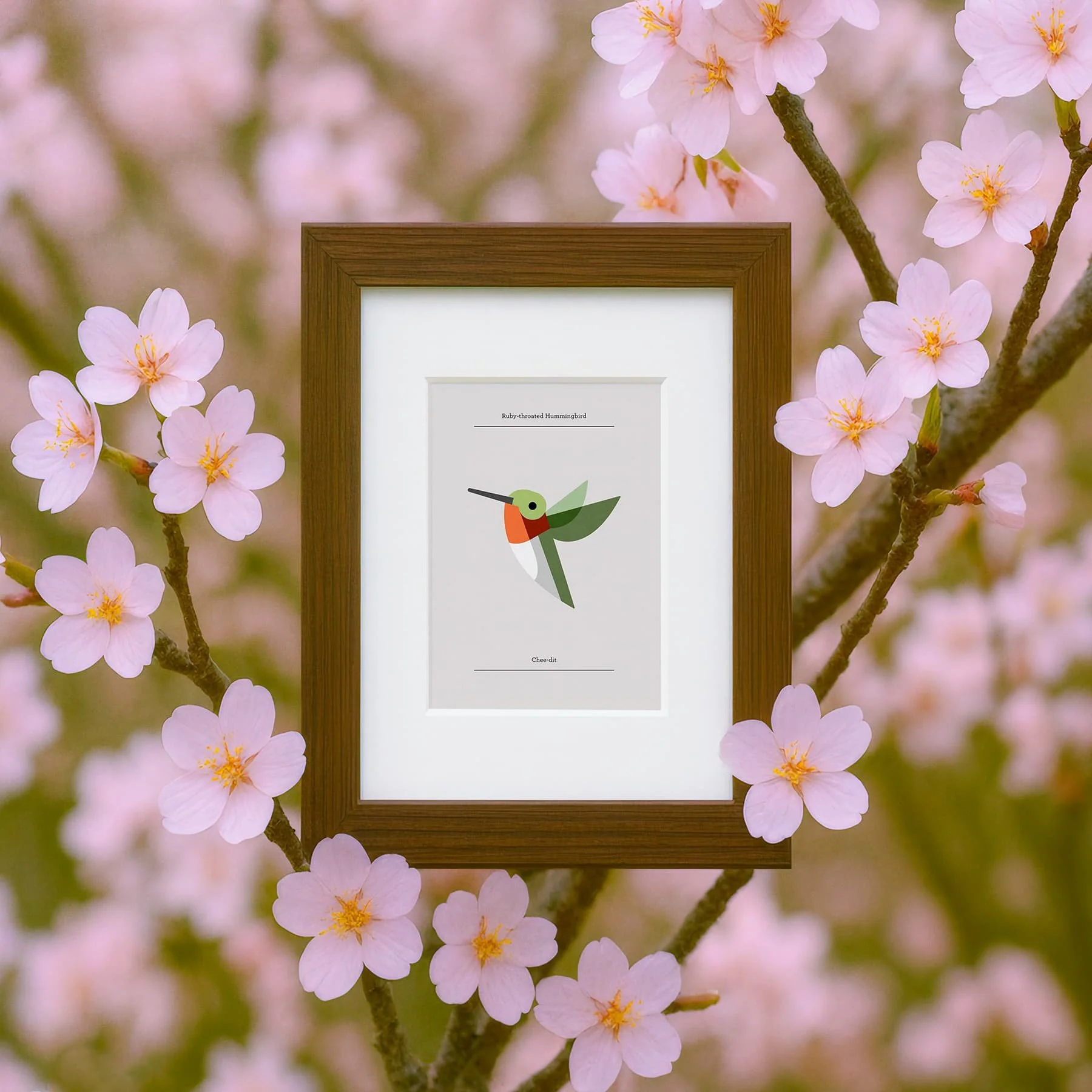
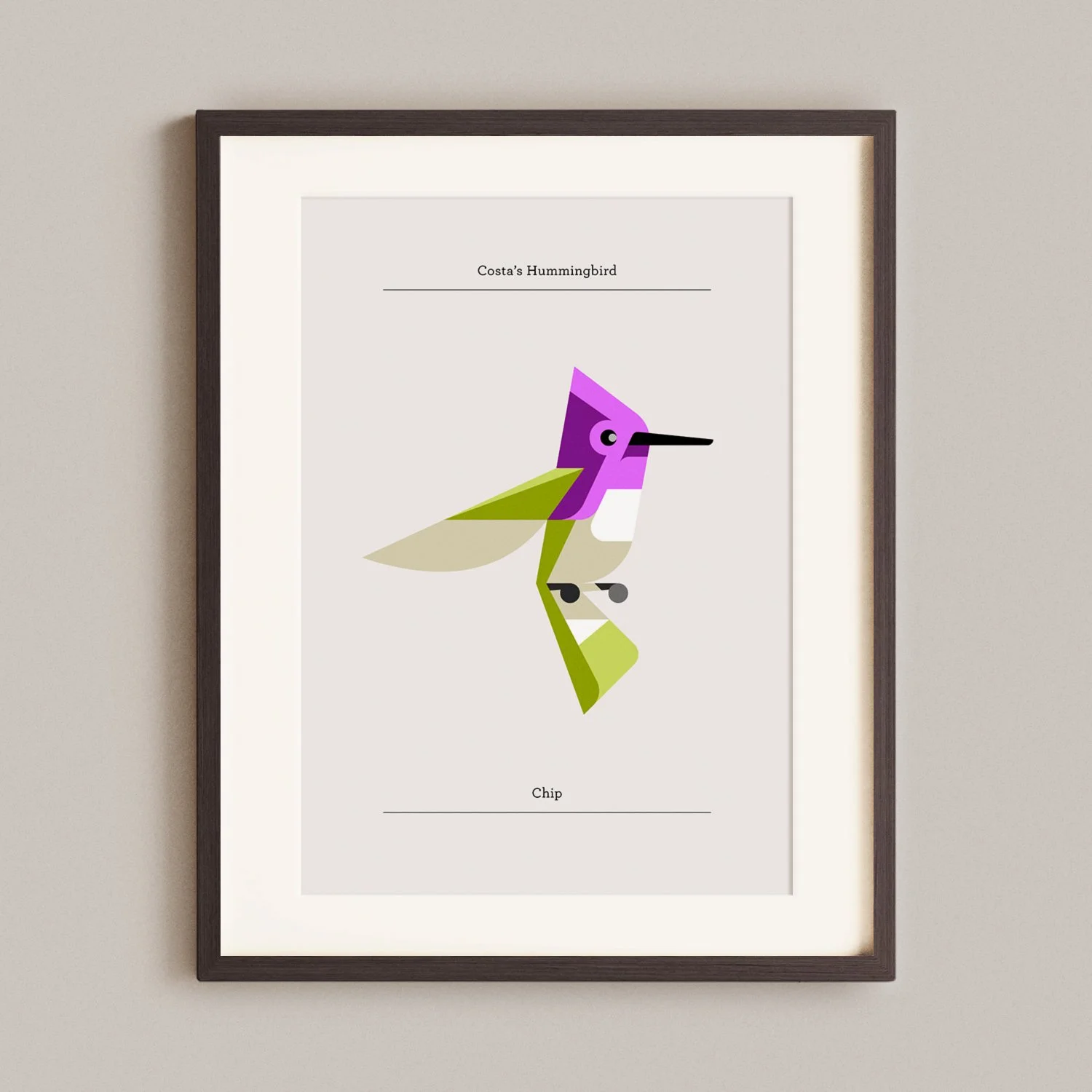
Image 1 of 3
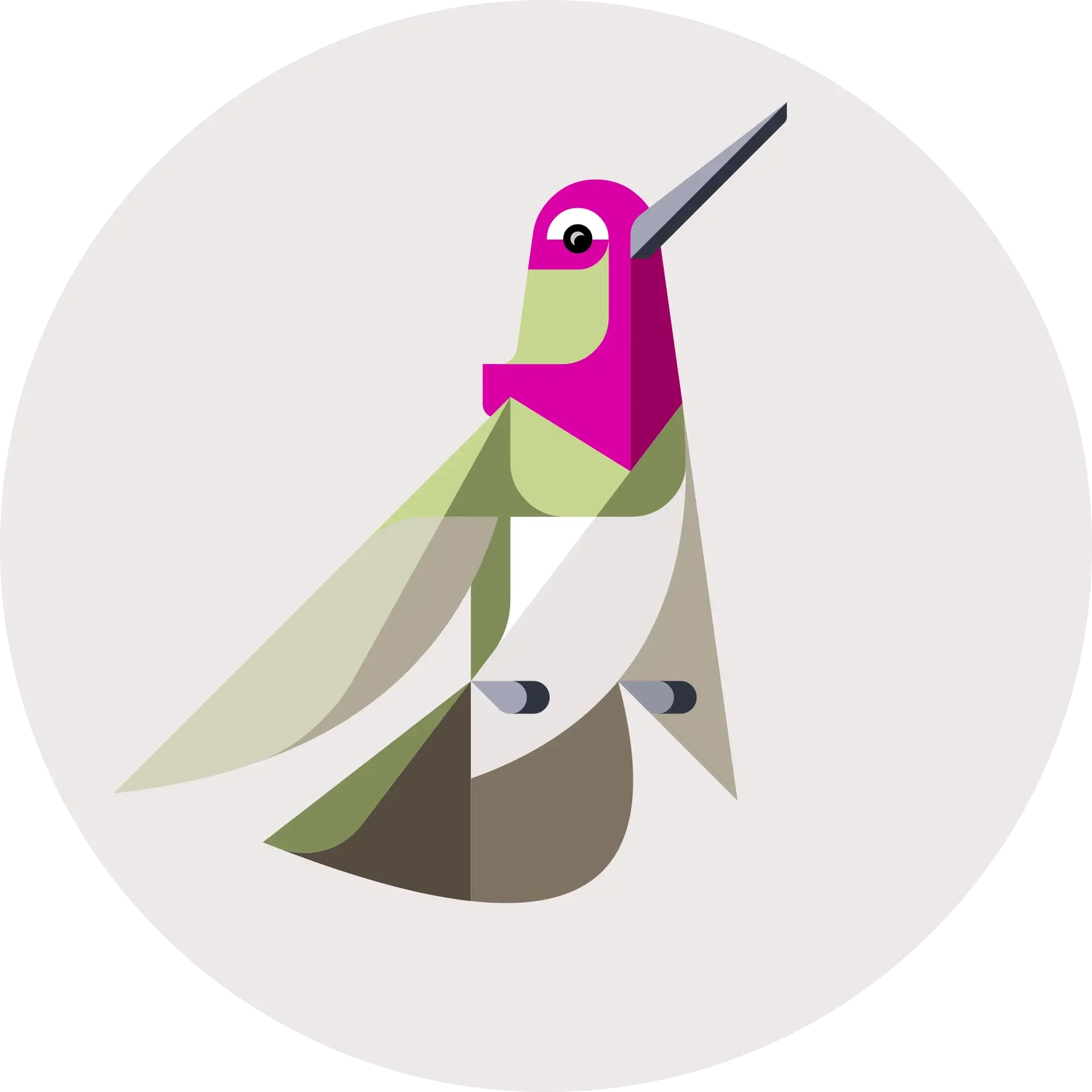 Image 2 of 3
 Image 3 of 3
Artwork
-
Open edition: Museum-quality giclée print on matte fine art paper (acid-free). Vibrant, long-lasting archival inks. Artist’s digitally printed signature.
-
5×7” (13×18 cm) — 8×10” (20×25 cm)
8×10” (20×25 cm) — 12×16” (30×41 cm)
12×17” (30×43 cm) — 16×20” (41×51 cm)
16×20” (41×51 cm) — 18×24” (46×61 cm)
20×30” (51×76 cm) — 24×36” (61×91 cm)
-
Frame not included. Print includes a white border for flexible framing options.
Fits Standard Frames
Works with most stock frames (slight adjustment may be needed)
Border allows trimming to fit your frame perfectly
Edge-to-edge fit with many matted frames
Border Benefits
Extra paper for mounting tabs
Accommodates wider or taller matte windows
Shows clean paper edge instead of print edge for a polished look
Pro Tip: For a perfect fit, pair with a custom matte in your stock frame.
Symbolism
The Anna's Hummingbird carries symbolic meaning shaped by its extraordinary metabolism and territorial nature. These three qualities define its most enduring symbolic associations.
-
Accuracy within speed
Anna's Hummingbirds hover perfectly still while feeding, remember hundreds of flower locations, and optimize foraging routes with mathematical efficiency. They assess nectar quality instantly, executing precise aerial maneuvers at high speed. This represents the principle that speed without accuracy is wasted energy—true efficiency combines velocity with exactness.
-
Sustained performance through recovery
Anna's Hummingbirds maintain one of the highest metabolic rates of any vertebrate—hearts beating 1,200 times per minute, consuming half their body weight in nectar daily. At night, they enter torpor, dramatically lowering body temperature to conserve energy. This represents sustainable high performance built on rhythms of intensity and restoration, not relentless output.
-
Knowing what deserves your energy
Male Anna's Hummingbirds defend feeding areas with spectacular 60-mph dive displays, yet this aggression is strategic—they protect only resources worth defending and share space when beneficial. This represents the ability to recognize what truly matters and what doesn't, understanding that selective engagement preserves energy for meaningful challenges.
Fauna
-
Anna's Hummingbirds are year-round residents along the Pacific Coast from British Columbia to Baja California, with populations expanding northward and eastward in recent decades. Unlike most hummingbirds, they don't migrate, adapting to winter through behavioral and physiological changes. They inhabit coastal scrub, urban gardens, oak woodlands, and suburban landscapes—thriving wherever flowering plants provide consistent nectar. Their adaptability to human-modified environments has contributed to their population growth and range expansion.
-
Common Name: Anna's Hummingbird
Scientific Name: Calypte anna
Length: 3.9-4.3 inches (10-11 cm)
Weight: 0.1-0.2 ounces (3-6 grams)
Wingspan: 4.7 inches (12 cm)
Sexual Dimorphism: Males display an iridescent rose-red crown and throat (gorget) that appears dark in poor lighting. Females have green crowns, gray underparts with white and red spotting on the throat, and a small red patch in the center
Coloration: Males have metallic bronze-green backs and pale gray chests. Females show green and gray tones with white underparts. Both sexes have dark tails and white eye-rings
Distinctive Features: Proportionally large head and bill for body size; capable of backward flight, indefinite hovering, and controlled vertical flight. Extraordinary metabolism with heart rates reaching 1,260 beats per minute during flight and consuming more than their body weight in nectar daily. Enter torpor at night, reducing metabolic rate by up to 95%. -
Anna's Hummingbirds are territorial and aggressive defenders of prime nectar sources. Males perform elaborate courtship displays, climbing to heights of 130 feet before executing a high-speed dive that produces a loud popping sound with their tail feathers at the bottom—a display used for both courtship and territorial defense.
They feed primarily on nectar from tubular flowers, visiting hundreds of flowers daily and showing strong preferences for red and orange blooms. Their tongues can extend and retract up to 13 times per second while lapping nectar. They also consume small insects and spiders for protein, often catching them in mid-air or gleaning them from foliage.
Anna's Hummingbirds are among the most vocal hummingbird species. Males produce a scratchy, buzzing song often described as a series of squeaky notes—the vocalization featured on this artwork. They sing from exposed perches to establish territory and attract mates. Both sexes produce sharp "chit" calls during aggressive encounters and when alarmed.
Breeding can occur year-round in mild climates, though typically peaks in winter and early spring. Females build tiny cup nests using plant down, spider silk, and lichen, often reusing the same nest sites across years. They incubate two eggs for 14-19 days and feed chicks for about three weeks after hatching.
Collection
-
The Flora Fauna Collection began in 2007 as an ongoing visual study of wildlife from around the world. Each piece captures both the essential form of a species and the unique character it embodies—celebrating natural beauty while revealing what makes each animal distinct.
-
Featured in British Vanity Fair, IDN Magazine, Dwell, Apartment Therapy, Design Milk, and Complex. The collection appeals to wildlife enthusiasts, design-focused collectors, and those who find personal meaning in the animals they choose to live with.
-
Designed for modular display and gradual collecting. These prints work individually as accent pieces or grouped to create personal galleries. Build a collection by region, habitat, aesthetic preference, or personal connection.
Recommended
Ideal for home offices and creative studios where sustained focus and disciplined energy matter.
Works well as a standalone accent or paired with complementary Flora Fauna prints in vertical or clustered arrangements.
Complements modern and minimalist interiors with clean lines, bright natural light, and vibrant color accents.
Featured


Shipping
-
Your print is made to order and ships from the closest production location to you, helping reduce delivery time and the chance of customs delays. Facilities are located across the U.S., Canada, Mexico, Brazil, Europe, the U.K., Australia, and Japan. Most orders ship from within the same region they’re delivered to.
If your country requires VAT (such as the U.K. or EU), it’s collected at checkout. U.S. customers are not charged VAT.
-
Production
2–5 business days for production fulfillment
Shipping
Estimated delivery (after production):
US: 3–8 business days
Canada / Europe / Australia: 5–12 business days
Other international locations: Timing varies by region based on local carriersThese are estimates and not guarantees — delivery times may vary during high-demand seasons
-
VAT
For many international destinations (including the UK and EU), VAT is collected at checkout and included in your order total. This helps reduce unexpected charges on delivery.Customs Duties & Import Taxes
Some countries may still apply additional import charges, depending on:Local regulations
The value of your order
Whether your country applies duties to printed goods or framed products
These fees, if applied, are the responsibility of the recipient and are not included in the product or shipping cost.
-
Tariff rules vary by country and sometimes change year-to-year. Depending on your region, you may see customs tariffs on certain manufactured goods. When possible, your order ships from a regional facility to help minimize or avoid tariff costs.
-
The holiday season brings significantly increased demand across all shipping carriers. This can affect both production and transit times.
Here’s what you need to know:
Order earlier than usual to ensure holiday delivery.
Carriers may apply seasonal surcharges and experience longer processing times.
Delivery estimates are not guaranteed during peak holiday periods.
Orders placed in late December may arrive after the holiday, depending on your region.
Instead of strict cutoff dates (which vary globally and change year-to-year), the safest window is:
For December gift-giving, place orders as early in November as possible.