Image 1 of 3
 Image 2 of 3
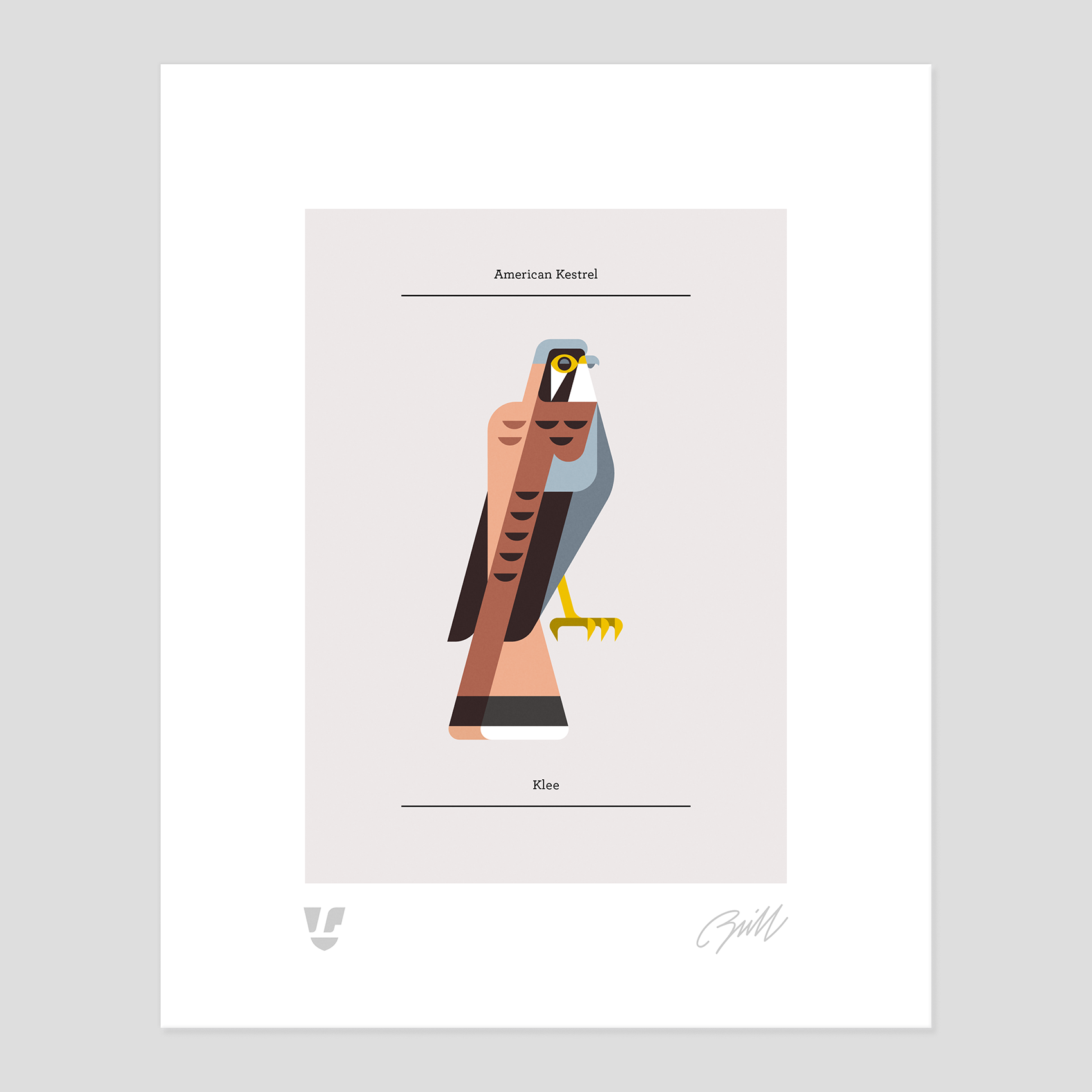 Image 3 of 3
Artwork
-
Open edition: Museum-quality giclée print on matte fine art paper (acid-free). Vibrant, long-lasting archival inks. Artist’s digitally printed signature.
-
5×7” (13×18 cm) — 8×10” (20×25 cm)
8×10” (20×25 cm) — 12×16” (30×41 cm)
12×17” (30×43 cm) — 16×20” (41×51 cm)
16×20” (41×51 cm) — 18×24” (46×61 cm)
20×30” (51×76 cm) — 24×36” (61×91 cm)
-
Frame not included. Print includes a white border for flexible framing options.
Fits Standard Frames
Works with most stock frames (slight adjustment may be needed)
Border allows trimming to fit your frame perfectly
Edge-to-edge fit with many matted frames
Border Benefits
Extra paper for mounting tabs
Accommodates wider or taller matte windows
Shows clean paper edge instead of print edge for a polished look
Pro Tip: For a perfect fit, pair with a custom matte in your stock frame.
Symbolism
The American Kestrel carries symbolic meaning shaped by its role as North America's smallest falcon and its remarkable hunting precision. These three qualities define its most enduring symbolic associations.
-
Seeing what others miss
American Kestrels detect ultraviolet light and spot prey from 100 feet away, tracking vole trails by following urine markers invisible to other predators. For those developing strategic clarity, this represents the ability to perceive patterns and opportunities that lie beyond ordinary observation.
-
Flexible strategy over rigid planning
American Kestrels thrive in deserts, grasslands, cities, and farmlands—adjusting hunting techniques and prey selection to match available resources. They nest in tree cavities, cliff crevices, or building ledges, shifting their diet seasonally between insects, mammals, and birds. This represents the capacity to succeed across changing conditions by modifying the approach rather than demanding perfect circumstances.
-
Timing over speed
Kestrels hover motionless while their wings beat rapidly—head perfectly still, scanning for movement below. They hold this position for extended periods, waiting for the precise moment to strike. This represents the principle that timing matters more than speed, and that observation often yields better results than rushing forward.
Fauna
-
The American Kestrel inhabits open country across the Americas, from Alaska and northern Canada through Central America to Tierra del Fuego. They thrive in grasslands, deserts, agricultural areas, and urban edges—anywhere with open hunting grounds and elevated perches. Unlike many raptors that require wilderness, kestrels have adapted successfully to human-altered landscapes, often spotted on roadside wires and fence posts. They nest in cavities—abandoned woodpecker holes, natural tree hollows, or nest boxes—since they cannot excavate their own.
-
Common Name: American Kestrel
Scientific Name:Falco sparverius
Length: 22–31 cm (8.7–12.2 in)
Weight: 80–165 g (2.8–5.8 oz)
Wingspan: 51–61 cm (20.1–24.0 in)
Sexual Dimorphism: Males have blue-gray wings; females have rust-barred wings
Coloration: Rust back and tail, white to buff underparts with dark spots, distinctive facial markings with two black vertical stripes
Distinctive Features: Small size (the smallest North American falcon), long tail, pointed wings, frequent hovering behavior. -
American Kestrels hunt primarily during daylight hours, using two distinct techniques: perch-hunting from elevated positions and their characteristic hovering flight. When hovering, they maintain a stationary position 10-50 feet above the ground, head perfectly still while scanning for movement below. Once prey is spotted, they drop rapidly in a controlled dive to capture it with their talons.
Their diet varies seasonally and by habitat, consisting primarily of large insects (grasshoppers, dragonflies, beetles), small mammals (voles, mice), small birds, and occasionally reptiles. They can adjust their hunting strategy based on prey availability, demonstrating remarkable behavioral flexibility.
American Kestrels are vocal raptors with several distinct calls. Their most common vocalization is a rapid, high-pitched "killy-killy-killy" or "klee-klee-klee"—the call featured on this artwork. They use this call during territorial disputes, courtship, and when alarmed. Males also produce a softer "whine" call during courtship feeding and pair bonding.
Kestrels form monogamous pairs during breeding season, with males performing aerial courtship displays. They are cavity nesters, utilizing natural tree holes, cliff crevices, or abandoned woodpecker cavities rather than building their own nests. Females typically lay 4-5 eggs, which both parents help incubate for about 30 days. Young fledge approximately 30 days after hatching but may remain dependent on parents for several additional weeks while learning to hunt.
Collection
-
The Flora Fauna Collection began in 2007 as an ongoing visual study of wildlife from around the world. Each piece captures both the essential form of a species and the unique character it embodies—celebrating natural beauty while revealing what makes each animal distinct.
-
Featured in British Vanity Fair, IDN Magazine, Dwell, Apartment Therapy, Design Milk, and Complex. The collection appeals to wildlife enthusiasts, design-focused collectors, and those who find personal meaning in the animals they choose to live with.
-
Designed for modular display and gradual collecting. These prints work individually as accent pieces or grouped to create personal galleries. Build a collection by region, habitat, aesthetic preference, or personal connection.
Recommended
Ideal for home offices and creative studios where precision and intentional action matter.
Works well as a standalone piece or grouped with other Flora Fauna prints in grid or asymmetric arrangements.
Complements modern minimalist, Scandinavian, and mid-century interiors with natural wood tones and neutral palettes.
Shipping
-
Your print is made to order and ships from the closest production location to you, helping reduce delivery time and the chance of customs delays. Facilities are located across the U.S., Canada, Mexico, Brazil, Europe, the U.K., Australia, and Japan. Most orders ship from within the same region they’re delivered to.
If your country requires VAT (such as the U.K. or EU), it’s collected at checkout. U.S. customers are not charged VAT.
-
Production
2–5 business days for production fulfillment
Shipping
Estimated delivery (after production):
US: 3–8 business days
Canada / Europe / Australia: 5–12 business days
Other international locations: Timing varies by region based on local carriersThese are estimates and not guarantees — delivery times may vary during high-demand seasons.
-
VAT
For many international destinations (including the UK and EU), VAT is collected at checkout and included in your order total. This helps reduce unexpected charges on delivery.Customs Duties & Import Taxes
Some countries may still apply additional import charges, depending on:Local regulations
The value of your order
Whether your country applies duties to printed goods or framed products
These fees, if applied, are the responsibility of the recipient and are not included in the product or shipping cost.
-
Tariff rules vary by country and sometimes change year-to-year. Depending on your region, you may see customs tariffs on certain manufactured goods. When possible, your order ships from a regional facility to help minimize or avoid tariff costs.
-
The holiday season brings significantly increased demand across all shipping carriers. This can affect both production and transit times.
Here’s what you need to know:
Order earlier than usual to ensure holiday delivery.
Carriers may apply seasonal surcharges and experience longer processing times.
Delivery estimates are not guaranteed during peak holiday periods.
Orders placed in late December may arrive after the holiday, depending on your region.
Instead of strict cutoff dates (which vary globally and change year-to-year), the safest window is:
For December gift-giving, place orders as early in November as possible.